
Latex vs. Butyl Bladder in Thermal Bonded Soccer Balls: The Air Retention vs. Ball Feel Trade-Off You Need to Know
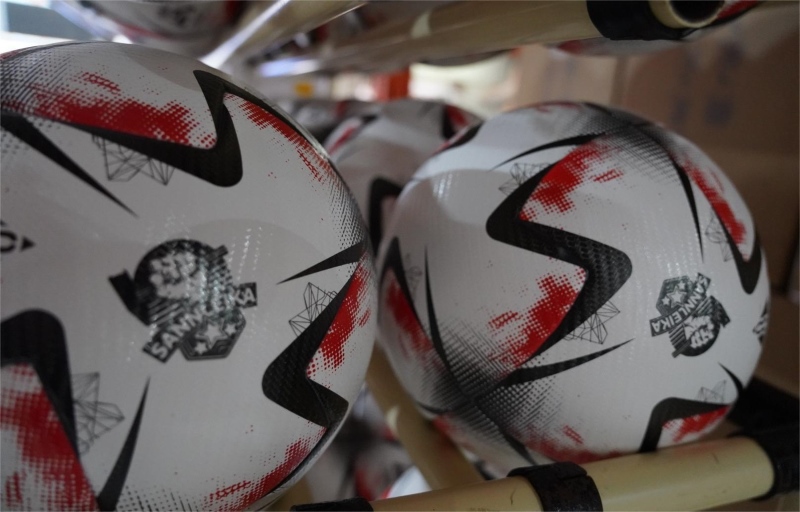
When sourcing professional or training-grade soccer balls, elite clubs, academies, and brands focus heavily on the panel assembly method. In modern sports engineering, thermally bonded soccer ball construction has widely replaced traditional hand-stitching. By using heat and pressure to molecularly fuse panels over a sealed carcass, thermal bonding creates a seamless, perfectly spherical surface that yields zero water absorption and a highly predictable flight trajectory.
However, the outer casing is only half of the performance equation. The true engine of any football is its internal bladder. The bladder dictates how the ball reacts when it leaves a player’s boot, how it bounces off the turf, and how often your equipment manager needs to fetch an inflation pump.
In premium thermal bonded balls, manufacturers rely on two competing core materials: Latex and Butyl. Selecting the wrong bladder configuration can ruin the benefits of an expensive thermal-bonded exterior. This technical guide explores the air retention versus ball feel trade-off to help you source the perfect fit for your market.
1. The Material Science: Natural Elasticity vs. Molecular Density
To understand why these two bladders perform so differently inside a seamless, thermally fused outer shell, we must evaluate their molecular properties.
   [Natural Latex Bladder]                     [Synthetic Butyl Bladder]
    Macro-Porous Carbon Chains                  High-Density Isobutylene Layers
         │                                           │
         ▼                                           ▼
  High Micro-Flex & Elasticity               Air Molecules Blocked Safely
  (Air Escapes Chronically)                  (Retains Pressure for Months)
Latex Bladders: The Organic Spring
Natural latex is harvested from rubber trees and processed into highly elastic, micro-thin membranes.
-
The Response Benefit: Latex possesses superior macro-porous elasticity, meaning it can stretch and return to its original shape faster than any synthetic substitute. This creates a low-inertia energy transfer upon impact, translating to a soft, cushioned touch and an explosive, predictable rebound.
-
The Air Retention Defect: Because latex is porous at a microscopic level, air molecules slowly seep through the bladder wall over time. A match ball with a latex core suffers from chronic soccer ball air retention loss, routinely dropping around 10 to 15% of its internal pressure every 24 to 48 hours.
Butyl Bladders: The Airtight Vault
Butyl is a synthetic copolymer engineered by blending isobutylene with a tiny fraction of isoprene to create a dense, tightly packed molecular lattice.
-
The Air Retention Benefit: The primary advantage of butyl is its outstanding gas impermeability. It holds air molecules in place like a mechanical vault. A quality butyl core keeps a soccer ball consistently pressurized for months without requiring a top-off.
-
The Response Defect: This high molecular density makes the material structurally stiffer. When struck, a butyl bladder resists rapid deformation and dampens shock energy, resulting in a firmer, harder feel at the toe and a slightly more rigid, less forgiving rebound.
2. The Engineering Synergy: How Bladders Interact with Thermal Bonded Casings
A soccer ball behaves as a composite spring system where the outer panel structure and the internal bladder work together.
 [Thermal Bonded Seamless Outer Shell] ──> Rigid, Zero-Water Absorption Structure
                   │
                   ├──> + [Latex Bladder]  = Balanced Elasticity (Ultra-Soft Professional Feel)
                   └──> + [Butyl Bladder]  = Maximized Stiffness (Hard-Wearing Training Profile)
Because thermal-bonded soccer ball construction utilizes a laminated PU skin bonded directly onto a reinforced fabric carcass, the outer shell is inherently more structured and unyielding than a loose, hand-stitched leather casing.
-
The Premium Combo (Thermal Bond + Latex): Pairing a structured, seamless thermal skin with a highly responsive latex bladder achieves a perfect performance balance. The rigid, waterproof panel frame provides high flight speed and aerodynamic stability, while the soft latex interior softens the overall feel. This ensures that headers, volleys, and fingertip goalkeeper saves are comfortable and safe.
-
The Utility Combo (Thermal Bond + Butyl): When you drop a butyl bladder into a thermally bonded shell, the structural stiffnesses multiply. This creates an exceptionally tough, hard-wearing ball. While it can feel slightly heavy or rigid during freezing winter training sessions, it delivers a highly durable shape that resists deformation even after thousands of high-velocity impacts against concrete walls or iron goalposts.
3. Architectural Performance Comparison Matrix
| Structural & Tactical Metric | Natural Latex Bladder | Synthetic Butyl Bladder |
| Air Retention Capacity | Low (Requires inflation every 1–2 days) | Excellent (Maintains pressure for months) |
| Striking Response & Feel | Ultra-soft, responsive, forgiving touch | Firm, direct, slightly rigid feedback |
| Rebound Trajectory Elasticity | High-rebound, fluid acceleration | Medium, controlled bounce characteristics |
| Raw Material Cost Profile | Higher premium capital allocation | Cost-effective, economical manufacturing |
| Target End-User Group | Professional Matches, FIFA Quality Pro Hubs | Schools, Youth Clubs, High-Volume Training |
4. Sourcing Playbook: Matching the Bladder to Your Use Case
To maximize your equipment budget and avoid complaints about flat balls or stiff panels, align your procurement selection with these real-world scenarios:
Scenario A: Elite Professional & Tournament Play
-
The Specification: Thermal Bonded PU + Natural Latex Bladder.
-
Why it matters: At a competitive tournament level, coaches and players demand ultimate tactile feel and precise ball control. The minor inconvenience of inflating the balls before every match is a small price to pay for a world-class, high-rebound surface that meets rigorous international competition standards.
Scenario B: Commercial Clubs, Academies, and School Training
-
The Specification: Thermal Bonded PU + High-Density Butyl Bladder.
-
Why it matters: For grassroots academies, soccer camps, and school physical education departments, maintenance efficiency is key. Coaches do not have the time to inflate 50 balls before every single morning drill. A butyl core wrapped in a seamless, scuff-resistant thermal skin ensures that equipment is always ready to play straight out of the storage bin, season after season.
Conclusion: Engineering Predictable Performance
In athletic manufacturing, material selection determines overall ball performance. There is no universal solution for every playing environment. Instead, manufacturers must match materials to player needs. Do not choose inventory based only on appearance. Instead, analyze thermal-bonded soccer ball structures carefully.
Latex bladders provide faster response and a softer touch. Meanwhile, butyl bladders deliver stronger air retention. As a result, each option suits different playing demands. Therefore, brands can create targeted product lines effectively. This approach also matches player expectations and budgets.
Explore SANNLEIKA’s customizable thermally fused soccer balls today. Discover high-performance athletic gear built for competitive play.




Add comment