
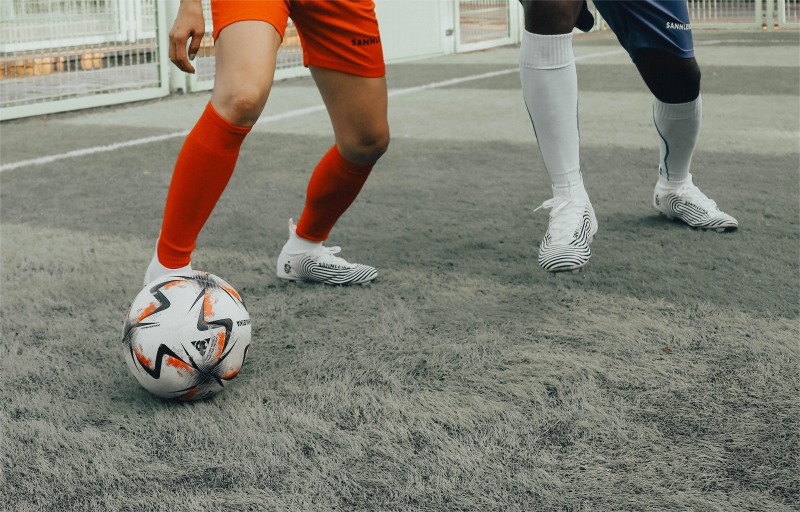
The Secrets of Machine Stitching: How Seam Engineering Impacts Football Longevity
The durability of a football depends on the precision of its construction. Many players focus only on the outer skin or the brand logo. However, the internal stitching determines if a ball maintains its shape over time. High-quality league match machine-stitched footballs utilize advanced mechanical processes to ensure maximum performance. This guide explores the technical details of stitch density, thread material, and internal reinforcement. We help you understand the engineering that prevents seams from opening during intense play.
1. Stitch Density: Achieving Structural Integrity
Stitch density directly determines how securely the panels bond together. Professional-grade, machine-stitched footballs typically feature 8 to 10 stitches per inch, which creates a tight and durable seam. As a result, the ball can withstand high internal air pressure without compromising its structure.
In contrast, when stitches are too widely spaced, the panels become vulnerable to separation. Over time, this leads to exposed threads and eventual seam failure during play. Therefore, precise needle calibration and controlled stitch density are essential for maintaining both durability and a perfectly spherical shape.
2. Thread Material: The Backbone of the Ball
Selecting the right thread material is equally critical, as it must endure constant friction, impact, and environmental exposure. For this reason, manufacturers rely on high-tenacity polyester thread as the industry standard.
Because of its superior tensile strength, polyester resists stretching even during high-speed impacts, such as powerful shots hitting the goalpost. Moreover, it offers excellent resistance to UV radiation and moisture, preventing degradation when the ball is used in wet or sunny conditions. Consequently, the use of high-quality polyester ensures that the seams remain tight and reliable throughout an entire season.
3. Bladder Reinforcement: Protecting the Inner Core
While external stitching provides structural cohesion, the internal bladder area remains a critical point of vulnerability. To address this, manufacturers reinforce the seams from within using specialized tape.
By applying strengthening strips along the internal seam lines, they add an extra layer of protection against repeated impacts. Furthermore, this reinforcement prevents stitch holes from expanding under pressure, which significantly reduces the risk of air leakage, deformation, or surface “bubbling.” As a result, the ball maintains its roundness and performance consistency over time.
4. Comparison of Stitching Standards
| Feature | Low-End Recreational Ball | League Match Machine-Stitched Footballs |
| Stitch Density | 4-6 Stitches per inch | 8-10 Stitches per inch |
| Thread Type | Basic Nylon | High-Tenacity Polyester |
| Reinforcement | No internal tape | Double-layered seam tape |
| Durability | Short-term play | Long-term professional use |
Consequently, the extra attention to detail translates into a better on-field experience. Furthermore, high-stitch density prevents sand and water from entering the inner casing. Therefore, you enjoy a consistent bounce and weight in every weather condition.
Conclusion: Precision Stitching for Peak Performance
A great football is a masterpiece of hidden mechanical engineering and material science.
Stop settling for low-quality balls that lose their shape after a few matches. Instead, embrace the durability of professional league match-stitched footballs. Consequently, you will spend more time playing and less time replacing gear. Experience the difference that reinforced seams and high-density stitching bring to your game today. Your performance deserves a ball that is built to last until the final whistle.
For even more exciting content, check us out on Facebook!
Don’t forget to click the link below to follow us—be the first to get the latest updates so you never miss a beat!
🔗 [https://www.facebook.com/Sannleika]







Add comment