
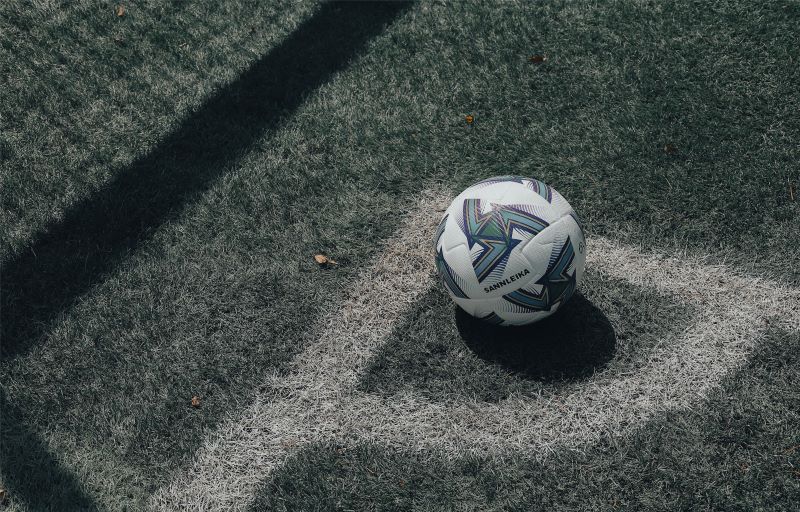
Staying “Awake” Amidst Sweat and Rain: How TPU Footballs Forge a Foundation of Trust Through Anti-Slip and Moisture Control
In the final minutes of a high-intensity match, the atmosphere is heavy with more than just tension. There is the salt of player sweat, the slickness of a rain-drenched pitch, and the invisible humidity that coats every surface. In these micro-moments, the outcome of a championship can hinge on a single touch. If the ball slides through a goalkeeper’s gloves or skids off a striker’s boot, the game is lost.
At the heart of this high-stakes environment lies a masterpiece of material science: the TPU (Thermoplastic Polyurethane) football. While traditional materials often become treacherous when wet, advanced TPU technology is engineered to stay “awake”—maintaining its grip, its weight, and its integrity regardless of the elements. This article explores how superior anti-slip and moisture control in TPU footballs transform a piece of equipment into a “Trust Foundation,” allowing athletes to commit 100% of their focus to the game, free from the fear of a “betrayal” by their gear.
1. The Micro-Crisis of the Pitch: The Physics of “Sliding”
A football match is a series of friction-based interactions. The friction between the boot and the ball dictates the spin; the friction between the gloves and the ball dictates the save.
The Hydroplaning Effect
When water—whether from rain or sweat—intervenes, it creates a microscopic film that acts as a lubricant. This is the “Hydroplaning Effect.” In lower-quality balls, this film causes the ball to lose its predictable trajectory and “slip” away at the moment of impact.
-
The Goalkeeper’s Nightmare: For a keeper, a slippery ball isn’t just a technical challenge; it’s a psychological burden. The hesitation caused by a lack of trust in the ball’s grip can lead to fumbles and conceded goals.
-
The Playmaker’s Struggle: For the midfielder, a wet ball that doesn’t “stick” to the foot makes high-speed dribbling nearly impossible, forcing the game into a slow, defensive grind.
2. TPU: The Engineered Solution for Extreme Friction
Thermoplastic Polyurethane (TPU) is the “hero material” of modern football construction because it allows for precise control over surface friction at the molecular level.
Consistent Friction Coefficient
Unlike PVC, which becomes “glassy” when wet, or leather, which becomes heavy and porous, premium TPU maintains a remarkably stable coefficient of friction.
-
Surface Tension Engineering: High-end TPU footballs feature a specialized surface texture—often a micro-embossed “dimple” or “grain” pattern. These micro-structures act as drainage channels, breaking the surface tension of water and ensuring that the player’s boot or glove makes direct contact with the TPU material rather than a layer of water.
-
“Soft-Tack” Technology: Advanced TPU formulations possess a natural “tackiness” that isn’t sticky to the touch but provides an aggressive grip when pressure is applied. This “Soft-Tack” remains active even in sub-zero temperatures or torrential downpours.
3. The Battle Against Weight: Mastering Moisture Control
In a rainy match, the enemy is not just the slipperiness of the surface, but the weight of the water itself.
Zero-Absorption Philosophy
A traditional stitched ball can gain up to 10-15% of its weight during a wet game. This extra weight changes the ball’s flight physics and increases the risk of player injury (particularly concussions from heading a heavy ball).
-
Thermal Bonding vs. Stitching: The “Trust Foundation” of a TPU ball is often reinforced by thermal bonding technology. By eliminating stitch holes, the ball becomes a hermetically sealed unit. Water has no entry point, ensuring the ball remains at its official FIFA-standard weight from the 1st minute to the 90th.
-
Impermeable TPU Membranes: TPU is inherently hydrophobic (water-repelling). While it allows the ball to be soft and flexible, it acts as a permanent barrier against moisture, ensuring the internal foam layers and bladder stay dry and responsive.
4. From Gear to “Trust”: The Psychological Edge
The technical specifications of a TPU ball serve a higher purpose: the mental state of the athlete.
-
Eliminating Distraction: At the highest level of play, the brain can only process a finite amount of information. If a player has to subconsciously calculate for a “slippery ball,” they have less mental bandwidth for tactical positioning. A reliable TPU ball “disappears” from the player’s mind, becoming an extension of their body.
-
Commitment to the Save: When a goalkeeper knows the ball will “stick” even in the rain, they are more likely to dive for the difficult catch rather than settle for a safe but risky parry. This confidence is the invisible “Trust Foundation” that wins games.
5. Durability and Lifecycle: The ROI of Premium TPU
Choosing a high-performance TPU ball is a strategic investment for clubs and professional academies.
-
Weather-Proof Longevity: Because TPU resists the “cracking” caused by the drying-and-wetting cycle common in traditional materials, the ball maintains its grip properties for hundreds of hours of play.
-
Consistent Performance Profile: Whether used on a dry synthetic turf in Dubai or a muddy natural pitch in London, the TPU ball provides an identical “touch.” This consistency is vital for player development and skill acquisition.
-
Low Maintenance: TPU’s resistance to staining and water absorption means the balls are easier to clean and store, preventing the mold and odor issues associated with porous materials.
6. Conclusion: The Guardian of the Match
A football is more than a sphere of air; it is the “Physical Interface” of the sport. In the collision of sweat, rain, and high-intensity effort, the TPU football stands as the ultimate guardian of performance.
By mastering the science of anti-slip textures and zero-moisture absorption, TPU technology provides the “Trust Foundation” that modern football demands. It ensures that the only thing “slipping” on the pitch is the defense—not the ball. When a player can stay “awake” and focused, knowing their equipment will never betray them in the rain, the sport reaches its truest, most beautiful form.






Add comment