
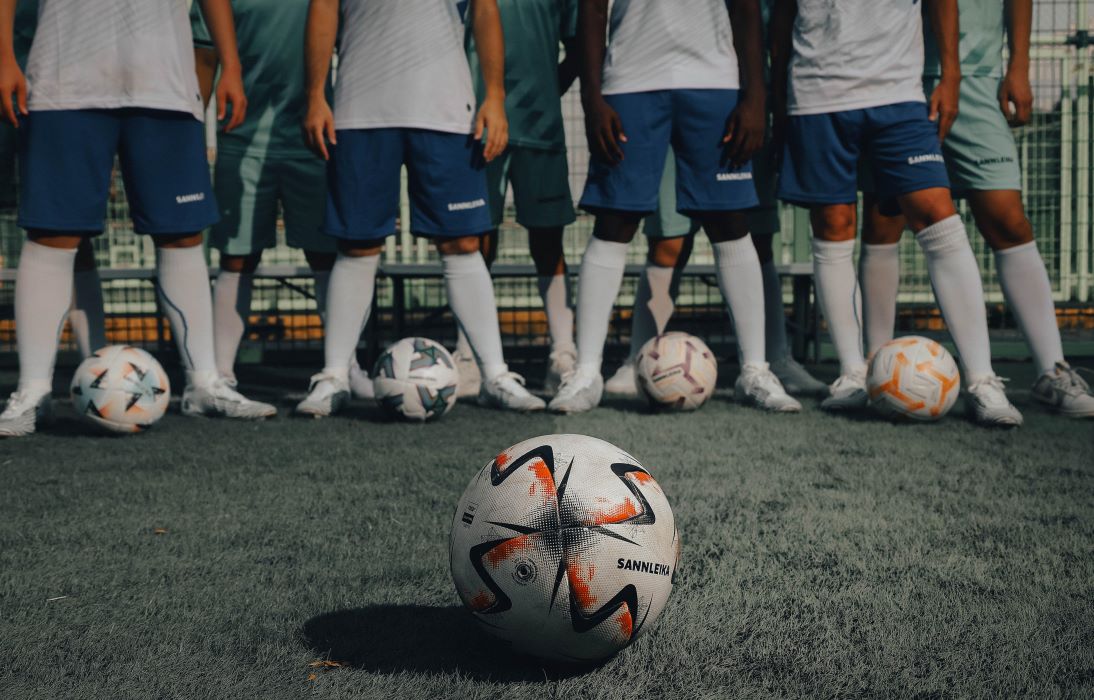
How Youth Match Footballs Dynamically Adapt to Skeletal Development and Foot Strength
hichYouth football development does not begin with tactics or formations. It begins with contact—between a growing foot and a moving ball. That contact shapes technique, confidence, injury risk, and long-term performance. Yet for decades, the industry treated youth footballs as simplified versions of adult products. Manufacturers merely reduced the diameter and weight, assuming smaller players needed smaller balls.
That assumption no longer holds.
Modern sports science confirms that children and adolescents do not develop in a linear proportion. Bone density, muscle strength, neuromuscular coordination, and joint stability evolve at different speeds. A football that ignores these differences can limit skill acquisition or increase injury risk. Consequently, youth match footballs must follow a dynamic matching philosophy, not a scaled-down adult model.
This article examines how size grading, mass distribution, elastic modulus, and surface friction work together to support players from U8 to U18. It explains how scientifically designed youth match footballs align with skeletal growth and foot power development, and why manufacturers like SANNLEIKA approach youth football design as a developmental system rather than a single product.
Why “Smaller Adult Balls” Fail Growing Players
Adult match footballs optimize performance for fully developed athletes. They assume:
-
Mature skeletal strength
-
Stable ankle joints
-
Fully developed neuromuscular coordination
-
High foot impact tolerance
Children and adolescents possess none of these characteristics consistently. A scaled-down adult ball still carries material stiffness, rebound behavior, and surface interaction designed for adult force output.
When young players use improperly matched footballs, several issues emerge:
-
Excessive impact load on developing bones
-
Reduced ball control due to over-response
-
Delayed technique formation
-
Increased fear of contact
-
Higher risk of overuse injuries
Therefore, youth match footballs must adapt to the player, not force the player to adapt prematurely to adult equipment.
Understanding Growth Stages: U8 to U18 Is Not One Group
Effective youth football design begins with understanding biological development. Growth does not progress evenly across ages.
U8–U10: Neural Learning Dominates
At this stage, children develop coordination, balance, and basic motor patterns. Muscular strength remains limited, while bones stay relatively soft and flexible.
Key needs:
-
Lightweight ball behavior
-
Low rebound force
-
High surface grip for control
-
Reduced impact stress
U11–U13: Transition Phase
Children experience rapid growth spurts. Limb length increases faster than muscle strength. Coordination may temporarily decline.
Key needs:
-
Stable flight behavior
-
Controlled elasticity
-
Balanced weight distribution
-
Predictable surface response
U14–U18: Power and Precision Development
Adolescents build strength, bone density, and refined technique. However, growth plates remain vulnerable.
Key needs:
-
Match-level performance
-
Regulated rebound
-
Competition-grade durability
-
Injury-conscious impact control
Youth match footballs must respond differently at each stage, which requires precise engineering rather than arbitrary sizing.
Which Size Grading: Why Size 3, 4, and 5 Exist for a Reason
Size alone does not define performance, but it establishes the foundation.
Size 3 Footballs (U8–U10)
The Size 3 footballs reduce circumference and mass to match shorter stride length and lower foot velocity. More importantly, they shorten the contact time between the foot and ball, improving control feedback.
Properly designed size 3 youth match footballs:
-
Reduce ankle torque
-
Improve first-touch learning
-
Encourage confident striking
Size 4 Footballs (U11–U13)
Size 4 balls act as a bridge between learning and performance. They maintain a manageable mass while introducing realistic flight behavior.
Well-engineered size 4 footballs:
-
Balance control and power
-
Stabilize aerial movement
-
Support technical progression
Size 5 Footballs (U14–U18)
Youth size 5 match footballs resemble adult balls in dimension but differ internally. Weight tolerance, elasticity, and panel response require careful adjustment to protect developing bodies.
In all cases, size works only when combined with material tuning.

Weight Is Not Just About Grams
Most standards define football weight within a narrow range. However, weight distribution matters more than total mass for youth players.
Youth match footballs must be managed:
-
Rotational inertia
-
Impact deceleration
-
Energy return
A ball that feels “heavy” to a young player often suffers from poor internal balance rather than excess mass alone. Advanced youth football manufacturing adjusts bladder elasticity, foam layering, and panel bonding to optimize weight perception.
As a result, players experience:
-
Improved strike accuracy
-
Reduced joint stress
-
Better shooting confidence
Elastic Modulus: Matching Ball Response to Foot Strength
Elastic modulus defines how a ball deforms and rebounds upon impact. Adult footballs assume high-impact force. Youth players generate lower force and require different response curves.
If elasticity remains too high:
-
The ball rebounds too quickly
-
Control becomes unpredictable
-
Impact force increases injury risk
Youth match footballs require progressive elasticity:
-
Softer response at low force
-
Stable rebound at medium force
-
Controlled energy return at a higher force
This behavior allows young players to develop technique naturally while protecting joints and bones.
Surface Friction: The Hidden Skill Accelerator
Surface friction defines how the ball interacts with the foot. Youth players rely heavily on tactile feedback to develop control.
Too little friction causes slipping and discourages confidence. Too much friction creates unrealistic control that fails to transfer to competitive play.
High-quality youth match footballs balance surface texture to:
-
Support dribbling mechanics
-
Improve passing accuracy
-
Enhance shooting consistency
Manufacturers achieve this balance through controlled PU textures, micro-pattern embossing, and material selection.
Dynamic Matching: A New Manufacturing Philosophy
The concept of dynamic matching replaces static design. Instead of designing one youth ball per size, manufacturers tune performance variables to developmental needs.
Dynamic matching considers:
-
Age-related force output
-
Bone strength progression
-
Neuromuscular adaptation
-
Skill learning curves
This philosophy transforms youth match footballs into developmental tools rather than generic equipment.
Injury Prevention Through Equipment Design
Injury prevention often focuses on training load and technique. Equipment plays an equally critical role.
Youth match footballs designed for growth reduce:
-
Stress fractures
-
Ankle instability
-
Knee strain
-
Overuse injuries
By lowering peak impact forces and improving control predictability, properly engineered footballs support long-term athlete health.
Match Performance vs Training Needs
Youth competitions demand consistency. Training demands adaptability. A well-designed youth match football bridges both.
SANNLEIKA youth match footballs maintain:
-
Match-compliant dimensions
-
Stable flight characteristics
-
Durable construction
At the same time, they preserve youth-friendly response profiles. This balance allows players to train and compete with the same ball type, reinforcing muscle memory and confidence.
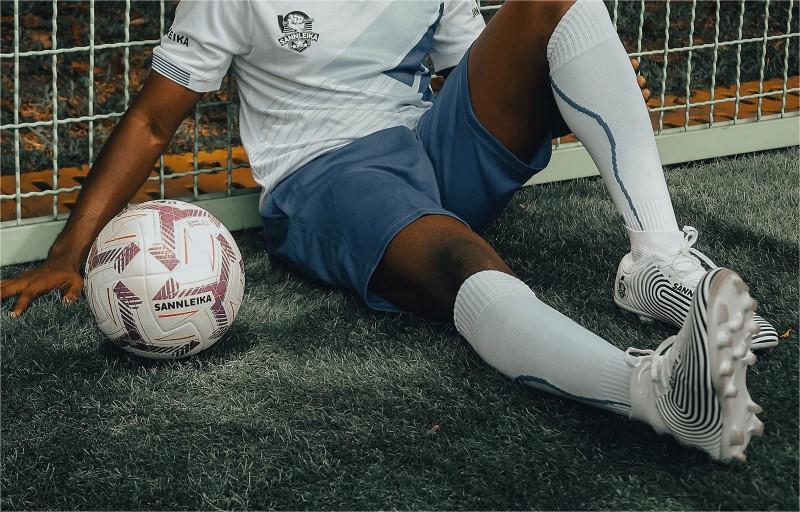
Manufacturing Precision: Where Development Meets Production
Dynamic matching requires precise manufacturing control. SANNLEIKA integrates material science, testing protocols, and quality consistency across production batches.
Key manufacturing elements include:
-
Controlled bladder elasticity
-
Multi-layer carcass tuning
-
Surface texture calibration
-
Weight balance verification
Through these processes, youth match footballs achieve reproducible performance across a large-scale supply.
Supporting Coaches, Academies, and Brands
Youth football development extends beyond players. Coaches, academies, and clubs require equipment that supports long-term progression.
By selecting youth match footballs designed for growth, organizations:
-
Improve training efficiency
-
Reduce injury downtime
-
Enhance player confidence
-
Strengthen development outcomes
Equipment alignment supports coaching philosophy rather than limiting it.
Why Youth Match Footballs Represent the Future of the Game
Football’s future depends on youth development. Equipment must evolve alongside training methods and sports science insights.
Youth match footballs designed through dynamic matching:
-
Respect biological growth
-
Enhance skill acquisition
-
Protect developing bodies
-
Prepare players for elite levels
This approach redefines quality in youth football manufacturing.
Conclusion: Designing for Growth Is Designing for Success
Youth players do not need smaller adult footballs. They need footballs that grow with them.
By aligning size, weight, elasticity, and surface interaction with skeletal and muscular development, youth match footballs become silent coaches. They guide technique, protect health, and build confidence.
For manufacturers like SANNLEIKA, this philosophy transforms product design into developmental responsibility. When footballs match growth, players unlock potential—not through force, but through intelligent adaptation.
That is how the game truly begins.







Add comment